
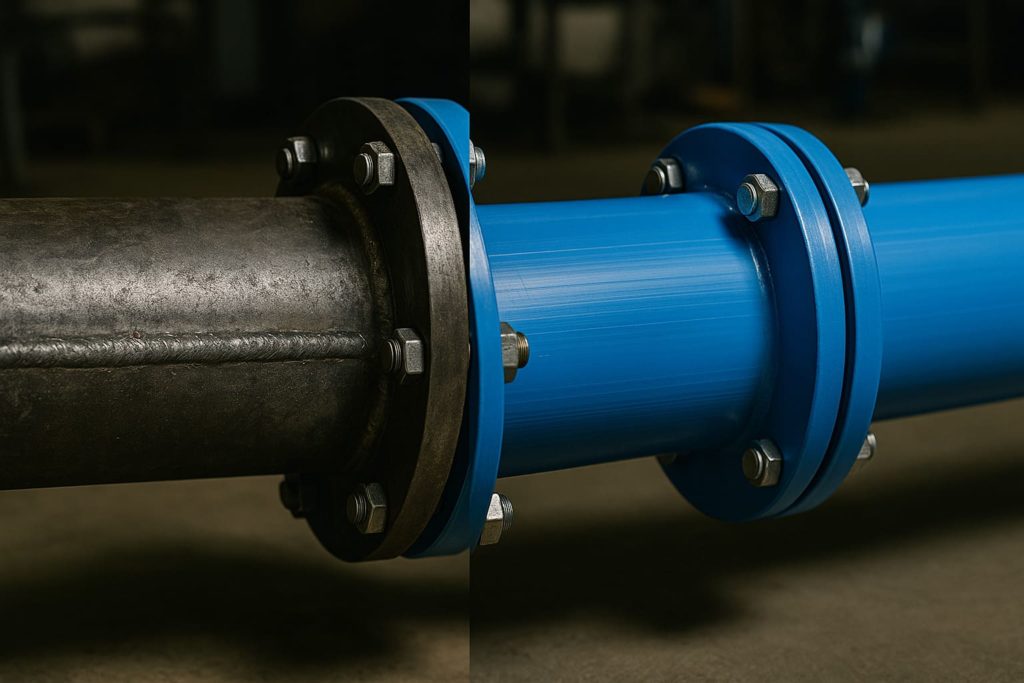
Steel vs. Plastic Pipes: Selecting the Optimal Material for Industrial Applications
When selecting piping materials for industrial applications, the choice between steel and plastic pipes is pivotal. Each material offers distinct advantages and limitations, making them suitable for specific environments and requirements. This guide provides a comprehensive comparison to assist in making informed decisions tailored to your project’s needs.
? Steel Pipes: Strength and Durability
Advantages:
-
High Strength and Pressure Resistance: Steel pipes are renowned for their ability to withstand high pressure and mechanical stress, making them ideal for heavy-duty applications.
-
Temperature Tolerance: They can endure extreme temperatures, both hot and cold, without compromising structural integrity.
-
Longevity: With proper maintenance, steel pipes can have a long service life, often exceeding 50 years.
Disadvantages:
-
Corrosion Susceptibility: Unless properly treated or coated, steel pipes can corrode over time, especially when exposed to moisture or certain chemicals.
-
Weight: Their heaviness can complicate transportation and installation, potentially increasing labor costs.
-
Cost: Generally, steel pipes are more expensive than their plastic counterparts, both in material and installation expenses.
Typical Applications:
-
Oil & Gas Industry: For transporting petroleum and natural gas due to their strength and pressure resistance.
-
Steam and High-Temperature Systems: Their ability to handle high temperatures makes them suitable for steam lines.
-
Structural Applications: Used in construction for structural support due to their rigidity and strength.
? Plastic Pipes: Flexibility and Corrosion Resistance
Advantages:
-
Corrosion Resistance: Plastic pipes are impervious to rust and corrosion, making them ideal for transporting water and chemicals.
-
Lightweight: Their low weight simplifies handling and installation, reducing labor costs.
-
Cost-Effective: Generally less expensive than steel pipes, both in terms of material and installation.
-
Chemical Resistance: Suitable for transporting a variety of chemicals without degradation.
Disadvantages:
-
Lower Pressure and Temperature Tolerance: Not suitable for high-pressure or high-temperature applications.
-
UV Sensitivity: Some plastics can degrade when exposed to ultraviolet light, limiting outdoor applications unless properly protected.
-
Potential for Damage: More susceptible to physical damage, such as cracking or breaking under impact.
Typical Applications:
-
Water Distribution: Commonly used in municipal and residential water systems.
-
Chemical Processing: Ideal for transporting various chemicals due to their resistance to corrosion.
-
Drainage and Sewage Systems: Used extensively in waste management systems for their ease of installation and resistance to corrosion.
? Making the Right Choice
The decision between steel and plastic pipes should be based on the specific requirements of your project, including pressure and temperature conditions, chemical exposure, installation environment, and budget constraints. For high-pressure, high-temperature, or structural applications, steel pipes are often the preferred choice. Conversely, for projects requiring corrosion resistance, ease of installation, and cost-effectiveness, plastic pipes may be more suitable.
Consulting with industry experts and considering the long-term implications of your choice will ensure the selection of the most appropriate piping material for your industrial needs.