
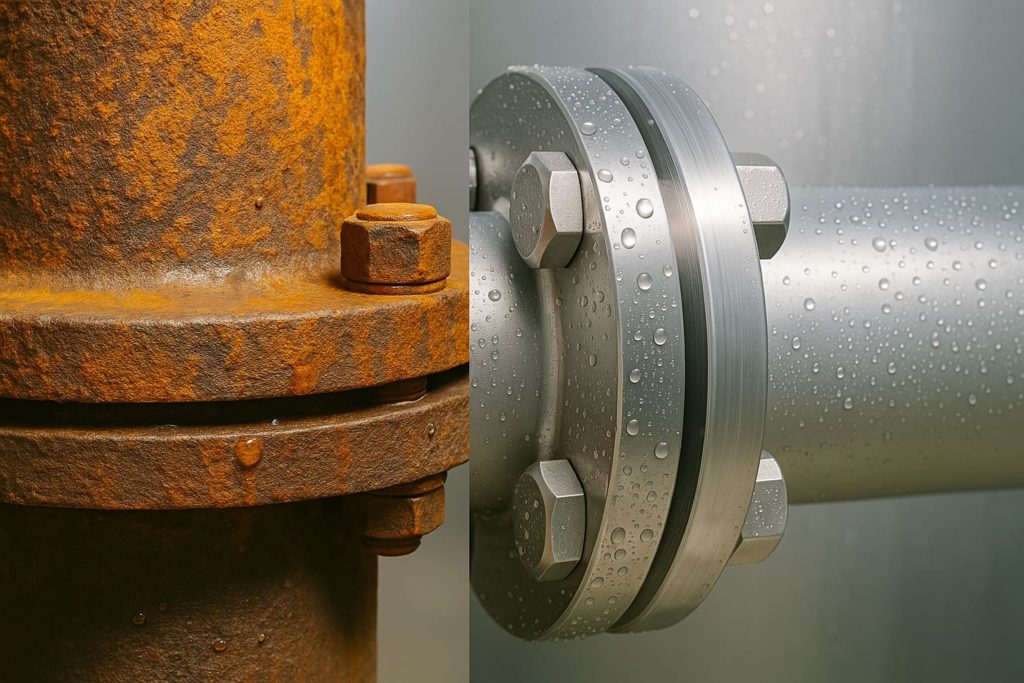
Preventing Corrosion in Industrial Pipelines: Materials and Best Practices
Corrosion in industrial pipelines is a significant concern that can lead to leaks, environmental hazards, and costly repairs. Understanding its causes and implementing effective prevention strategies are crucial for maintaining the integrity and longevity of pipeline systems.
What Causes Corrosion?
Corrosion occurs when metal reacts with environmental elements, leading to material degradation. Common factors contributing to pipeline corrosion include:
-
Moisture and Humidity: High moisture levels can accelerate the oxidation process.
-
Chemical Exposure: Contact with acids, salts, or other reactive substances can corrode metal surfaces.
-
Temperature Variations: Fluctuating temperatures can cause expansion and contraction, leading to material stress and corrosion.
-
Microbial Activity: Certain bacteria can induce corrosion through their metabolic processes.
These factors can compromise pipeline integrity, leading to safety hazards and operational inefficiencies.
Selecting the Right Materials
Choosing appropriate materials is a fundamental step in corrosion prevention:
-
Stainless Steel: Offers excellent resistance to corrosion and is suitable for various industrial applications.
-
Special Alloys: Alloys such as Inconel or Hastelloy provide enhanced corrosion resistance in aggressive environments.
-
Plastic and Composite Materials: Materials like PVC or HDPE are inherently resistant to corrosion and are often used in specific applications.
Selecting materials based on the specific environmental conditions and transported substances is essential for pipeline durability.
Protective Coatings
Applying protective coatings can significantly reduce corrosion risks:
-
Epoxy Coatings: Provide a durable barrier against moisture and chemicals.
-
Fusion-Bonded Epoxy (FBE): Commonly used in pipelines for its strong adhesion and resistance to various environmental factors.
-
Polyurethane Coatings: Offer flexibility and resistance to abrasion and chemicals.
Proper application and maintenance of these coatings are vital for their effectiveness.
Maintenance Practices
Regular maintenance is crucial for early detection and prevention of corrosion:
-
Routine Inspections: Scheduled checks can identify early signs of corrosion or coating degradation.
-
Cathodic Protection: A technique that uses electrical currents to prevent corrosion on metal surfaces.
-
Corrosion Inhibitors: Chemical substances that, when added to the environment, decrease the corrosion rate.
Implementing these practices helps in extending the service life of pipelines and ensuring operational safety.
Conclusion
Preventing corrosion in industrial pipelines requires a comprehensive approach that includes selecting suitable materials, applying effective protective coatings, and adhering to regular maintenance protocols. By addressing these areas, industries can safeguard their infrastructure, ensure safety, and optimize operational efficiency.